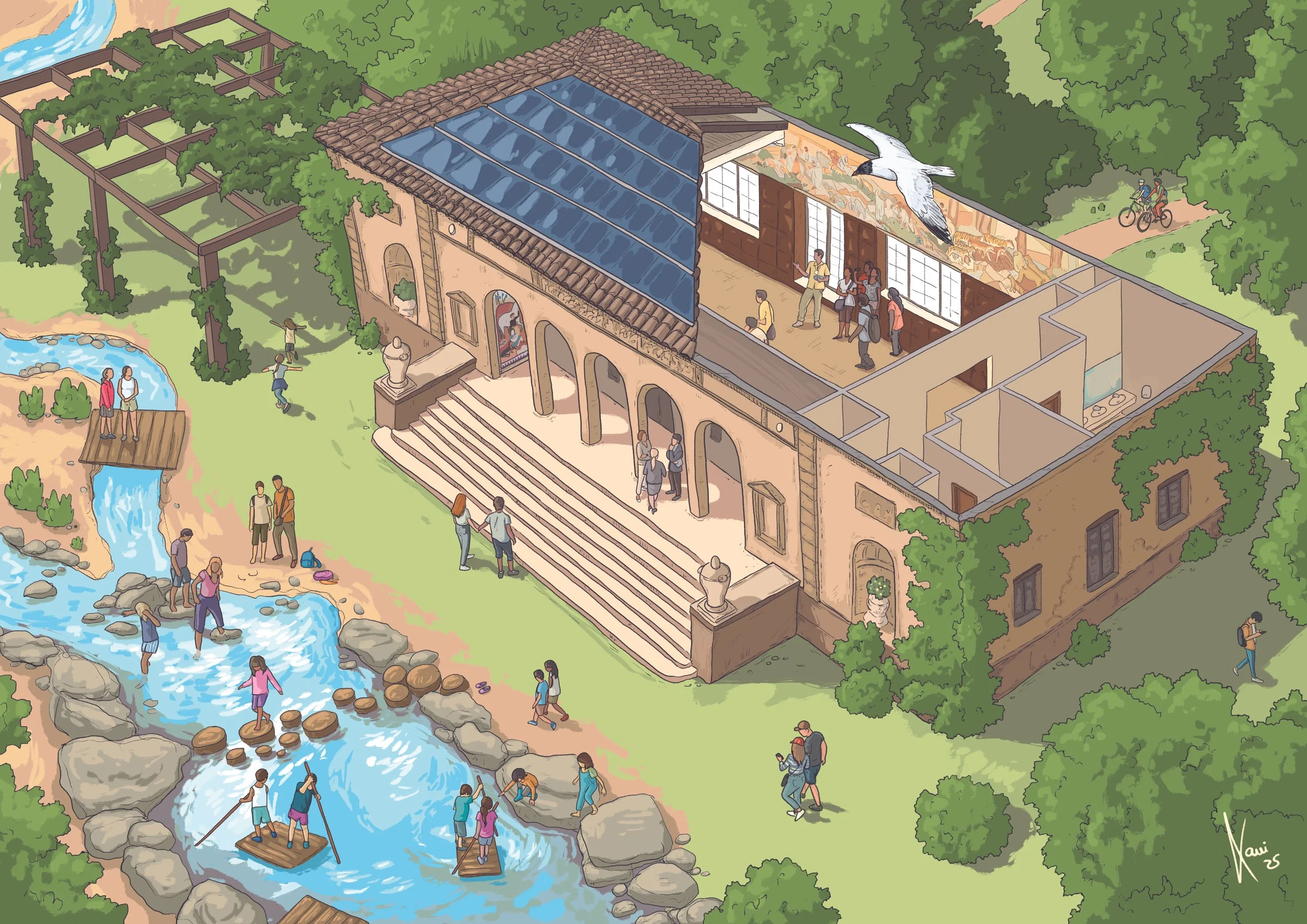
The Climate & Action Center
Act locally. Heal globally. Begin here.
Overview
Located within the repurposed historic Mother’s Building, The Climate & Action Center is the beating heart of the EcoPark—where history, justice, and the future converge. Once a symbol of the old zoo, the building is reborn as a civic hub for climate education, community organizing, and environmental action. This is the mother’s building of the EcoPark in every sense: a place to gather, grieve, build, and imagine.
Honoring the original architecture while equipped with cutting-edge green technology, the Center links San Francisco’s ecological future to its complex past—including the legacy of animal captivity. It invites visitors to engage with that history, and to co-create new narratives of care, resilience, and collective transformation.
Why This Matters
The Climate & Action Center doesn’t erase the zoo’s past—it transforms it. Land once used to contain life becomes a launchpad for liberation, care, and civic imagination. This is more than an exhibit: it’s a living institution where memory becomes movement, and where the urgency of climate justice meets the power of public participation.
By blending historic architecture with regenerative design, and pairing ecological truth-telling with real tools for action, the Center becomes a blueprint for how cities can confront the past and build something radically better—for all beings.
What You’ll Experience
Workshops and teach-ins on climate action, water justice, waste reduction, green jobs, and local environmental policy.
Flexible gathering spaces for public meetings, community celebrations, youth summits, and movement-building.
A storytelling theater and media lab, screening youth-made films, climate oral histories, and archival footage from the zoo’s past.
Immersive exhibits connecting neighborhood-level environmental justice to global climate impacts and frontline solutions.
Restored architectural elements, merged with sustainable infrastructure: solar panels, green roofs, and net-zero water systems.
Digital action kiosks, empowering visitors to join campaigns, contact decision-makers, support frontline groups
Rotating installations featuring Indigenous knowledge holders, youth activists, climate artists, and rewilding visionaries.
A deep reckoning space, inviting reflection on the site’s legacy—from confinement and control to restoration and freedom.