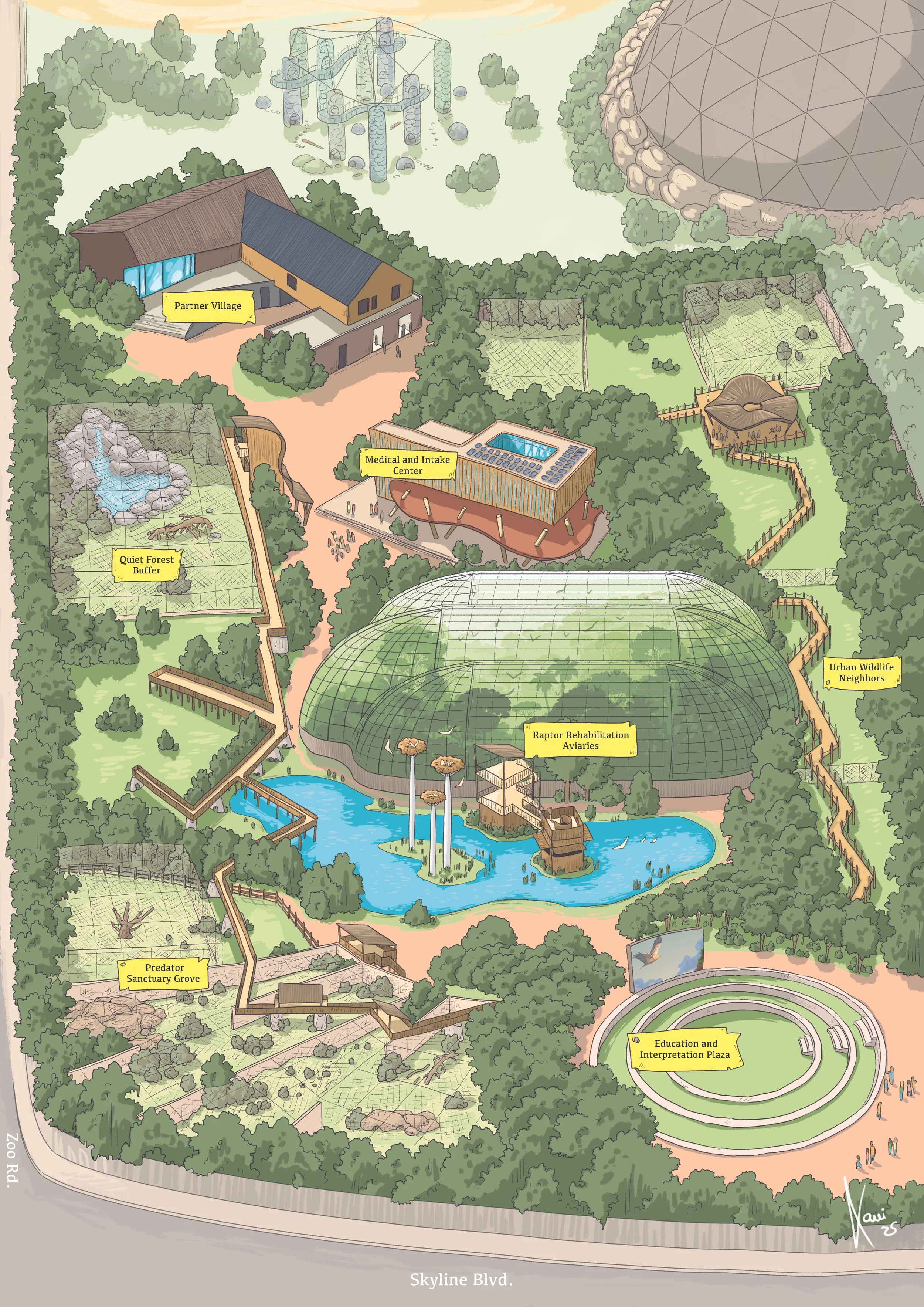
California Wildlife Rescue & Recovery Hub
A home for the unreleasable, a lifeline for the rest.
Overview
A state-of-the-art center dedicated to protecting, healing, and restoring California’s native wildlife. This two-part facility functions both as a lifelong sanctuary for non-releasable animals and as an active hub for breeding, rehabilitation, and release of endangered and at-risk species. Operated in partnership with wildlife agencies, tribal stewards, and accredited sanctuaries, the hub offers visitors a rare chance to witness the full arc of conservation—from rescue to rewilding—while upholding the highest standards of animal welfare and privacy.
Why This Matters
California’s biodiversity is in crisis—from climate disruption and habitat loss to pollution and invasive species. This hub addresses both ends of the spectrum: lifelong sanctuary for the animals we can’t release, and active restoration for those we still can. It models an approach rooted in science, empathy, and transparency—helping visitors understand not only the animals themselves, but the systems that support them.
What You’ll Experience
Sanctuary & Rehabilitation Zone:
Custom-designed habitats for non-releasable animals like river otters, foxes, owls, and turtles—designed for natural behavior, not display
Wildlife rehabilitation facilities supporting temporarily injured animals with limited public viewing.
Intimate storytelling experiences that emphasize each animal’s journey, natural behaviors, and role in the ecosystem.
Breeding & Release Conservation Lab:
Active recovery programs for species such as the San Francisco garter snake, California red-legged frog, Chinook salmon, and western pond turtle.
On-site breeding facilities, head-start labs, and outdoor prep habitats mimicking wild conditions.
Interactive exhibits showing incubation, froglet rearing, and turtle growth milestones.
Conservation dashboards, live data displays, and citizen science tools to follow release success and ecosystem impact.
Community & Education Engagement:
Volunteer opportunities and student programs that invite the public into the daily work of conservation science.
Field trips and workshops focused on empathy, ecological literacy, and the interconnectedness of all life.